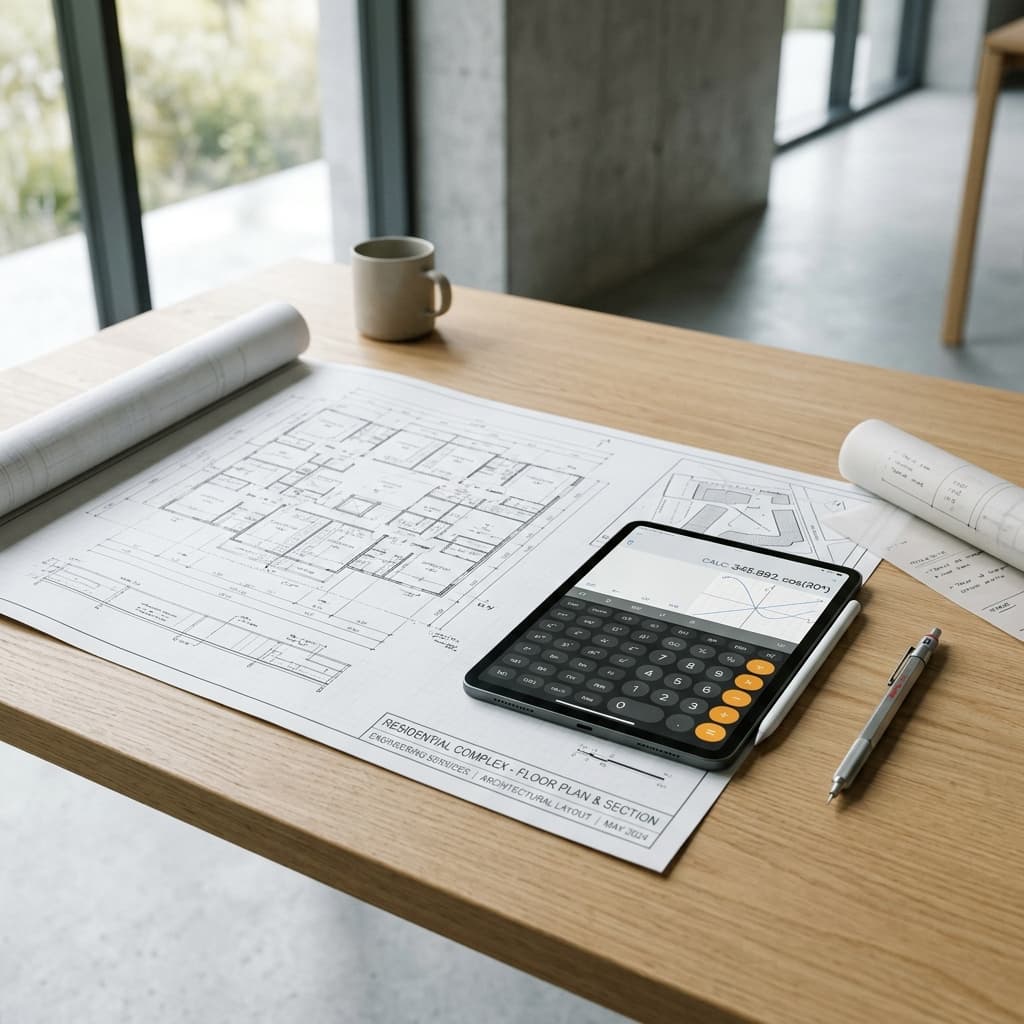
Adding a server rack to an existing office board
A server rack's power draw isn't the only thing an existing office board has to absorb, the cooling load it creates and the redundancy it may need both change the sizing question. Treating it as "one more circuit" understates what's actually being added.
Key Takeaways
- Server rack power density has risen sharply over the past decade: racks designed for more than 25 kW were already the baseline in 2011, and modern facility-wide power densities can exceed 100 times those of conventional office buildings.
- Cooling typically consumes roughly 7-30% of total data-hall energy use depending on system efficiency, against an average of around 60% used by the servers themselves, meaning a rack addition brings a real, non-trivial cooling load along with its electrical draw.
- Critical IT equipment is often designed around dual power feeds (A-side and B-side) to achieve N+1 redundancy, a requirement that a typical single-feed office board wasn't necessarily built to support.
- Adding a rack to an existing office board is rarely just "one more circuit": it's a combined electrical, cooling, and often redundancy question, and sizing it as a simple wattage addition understates what actually needs to be checked.
A single server rack tucked into a corner of an office fit-out looks, on the surface, like a modest addition, a few more amps on the board. In practice it brings three separate demands along with it, electrical capacity, cooling capacity, and sometimes power redundancy, and treating it as a simple wattage line item on the existing board misses the two demands that aren't electrical at all.
Why rack power density is a bigger number than it used to be
Server rack designs have moved well past what an older office electrical spec might assume: racks designed for more than 25 kW were already standard as far back as 2011 (Wikipedia, data center, retrieved 2026-09-10), and modern hyperscale facilities can run power densities exceeding 100 times a conventional office building's (Wikipedia, data center, retrieved 2026-09-10). A single rack for a small office IT room won't approach hyperscale figures, but the trend direction matters: rack density has been rising, not staying flat, so a board spec written years ago for a much lighter IT load can be genuinely undersized for what a current-generation rack actually draws. Run the specific rack's rated power draw through the electrical load calculator against the existing board's spare capacity, rather than assuming a modest-looking rack fits without checking.
The cooling load that comes with it, not instead of it
Cooling is a substantial, not incidental, part of the load a server rack creates: in a data-hall context, cooling typically accounts for roughly 7-30% of total energy use depending on system efficiency, against an average of around 60% used by the servers themselves (Wikipedia, data center, retrieved 2026-09-10). For a rack added into existing office space, this means the office's general HVAC, sized for people and normal office equipment, is being asked to absorb a concentrated new heat source it likely wasn't designed around. Maintaining suitable temperature and humidity is described as critical to preventing equipment damage from overheating (Wikipedia, data center, retrieved 2026-09-10), which makes dedicated or supplementary cooling for the rack location a real design question, not an optional extra.
When redundancy changes the electrical spec, not just the capacity
For genuinely critical IT equipment, standard practice connects to dual power feeds, an A-side and a B-side, to achieve N+1 redundancy against a single feed failure (Wikipedia, data center, retrieved 2026-09-10). A typical office board wasn't built with that architecture in mind, a single incoming supply feeding a single board. If the equipment going into the rack is business-critical enough to justify redundancy, that's not a capacity question at all, it's a topology question that may require a second, independent supply path, which is a materially bigger piece of work than adding spare circuit capacity to the existing board.
Cable management and physical routing, the smaller but real third factor
Beyond power and cooling, data centre practice manages rack cabling through options like overhead cable trays or raised-floor routing to accommodate equipment as it's added (Wikipedia, data center, retrieved 2026-09-10). A single rack dropped into an office corner without equivalent thought given to cable routing tends to accumulate ad hoc cabling that becomes a maintenance and safety problem later, even if the electrical capacity itself was sized correctly from day one.
Frequently asked questions
Is checking spare capacity on the existing board enough before adding a server rack?
No, it's necessary but not sufficient. Electrical capacity is the first check, but cooling capacity for the added heat load and, for critical equipment, power redundancy both need separate evaluation, since none of the three is automatically covered by the others being adequate.
Does a small office server rack really need dedicated cooling?
It depends on the rack's actual power draw and the office HVAC's existing spare capacity, but the underlying principle holds regardless of scale: the electrical power a rack draws is converted almost entirely to heat, and that heat has to go somewhere. A rack that draws a meaningful fraction of the room's existing cooling capacity is worth checking explicitly rather than assuming general office air conditioning absorbs it.
When does a server rack need dual-feed redundancy rather than a single circuit?
When the equipment it houses is critical enough that a single power interruption would cause a business impact worth the additional cost and complexity of a second, independent supply path. This is a business-risk decision as much as an electrical one, and worth making explicitly rather than defaulting either way.
The bottom line
Adding a server rack to an existing office board is really three questions bundled into what looks like one: does the board have spare electrical capacity, does the space have spare cooling capacity, and does the equipment's criticality justify power redundancy the existing single-feed board wasn't built for. Answering only the first question and assuming the other two are fine is how a "simple" rack addition turns into an overheating or single-point-of-failure problem later. For a rack that's outgrowing an office corner into something closer to a dedicated IT room, a proper data centre power solution is worth scoping rather than continuing to bolt capacity onto the existing office board indefinitely.
Figures were verified on 10 September 2026 against Wikipedia's data center reference article. This session's live web search was unavailable, so specific current UAE data-centre or office-fit-out cooling and redundancy design standards could not be independently verified here; confirm applicable requirements with a licensed MEP consultant before finalising a rack installation.
Follow WiserMonks in Google Search & AI Overviews
Select WiserMonks as a preferred source to see our verified insights and calculators highlighted in Top Stories & AI Search.
More on Facility, Fit-Out & Interiors
- Parking bay dimensions, aisle widths and turning circles: the layout that actually fitsA car's own turning circle is not what UAE parking codes actually regulate, which is why layouts fail on the aisle, not the bay. This verifies the real Dubai and Abu Dhabi figures.
- Dilapidations: budgeting for handing the space backHanding back a UAE office means stripping it to shell and core, a cost rarely in the original fit-out budget. Here is what yield-up costs, what the law requires, and how to provision for it.
- Fit-out programme: the eight-week critical pathEight weeks is achievable for a mid-size Dubai office fit-out, but only if Civil Defence and joinery start on day one. Here is the sequence that actually holds.