Commercial solar farms typically range from 1MW to 10MW and are often built to directly power nearby industrial facilities (behind-the-meter) or for smaller Power Purchase Agreements (PPAs). Utility-scale farms exceed 10MW, connect directly to the high-voltage transmission grid, and generate power exclusively for wholesale to the national utility.
Scalable Solar Farms for Long-Term Energy Generation
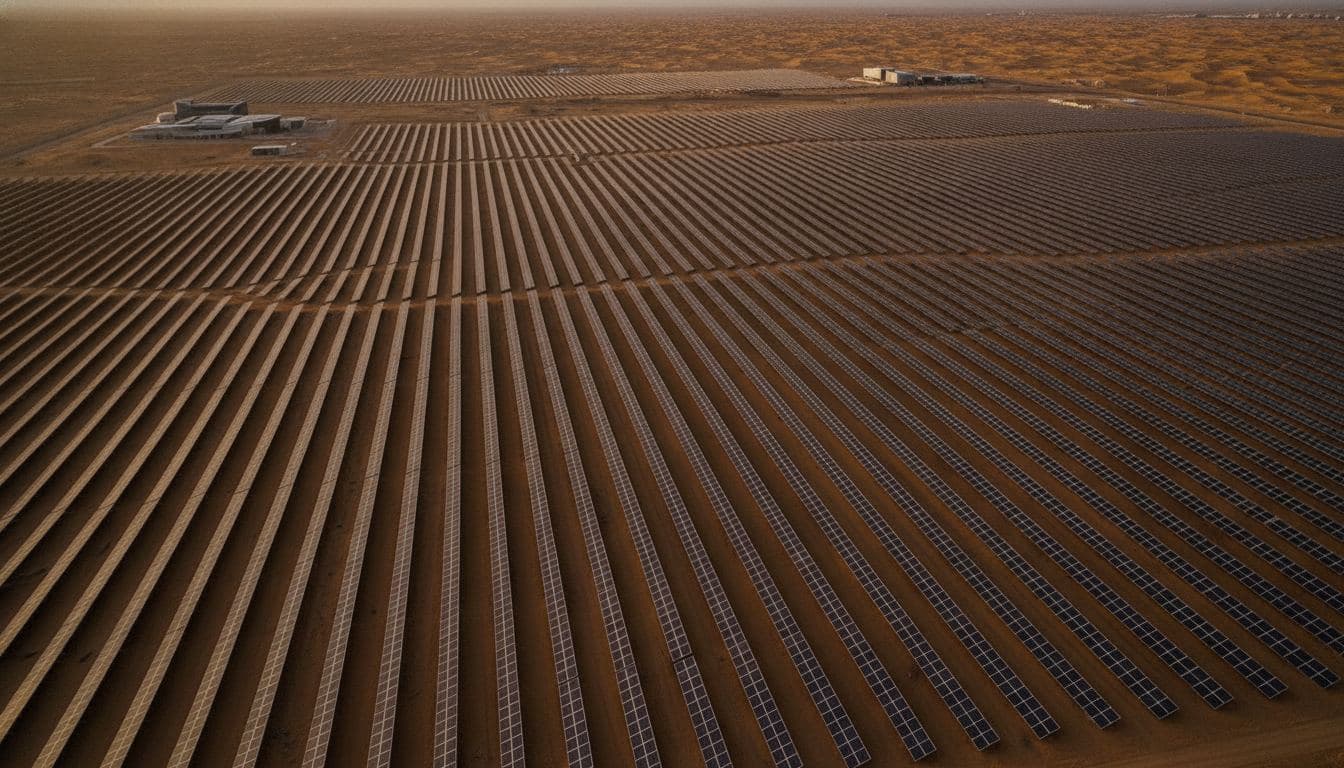
A solar farm is a ground-mounted photovoltaic system designed to generate electricity at commercial or utility scale. Successful development requires land analysis, solar-resource assessment, electrical design, grid studies, equipment selection, approvals and long-term performance planning.
Utility-Scale Engineering & Procurement
What is the difference between commercial and utility-scale solar?
Commercial solar farms typically range from 1MW to 10MW and are often built to directly power nearby industrial facilities (behind-the-meter) or for smaller Power Purchase Agreements (PPAs). Utility-scale farms exceed 10MW, connect directly to the high-voltage transmission grid, and generate power exclusively for wholesale to the national utility.
Mitigating Risk in Large-Scale Solar Development
Developing a solar farm is a complex, multi-year infrastructure project. The primary risk lies not in the solar panels themselves, but in the grid interconnection, land topography, and long-term O&M (Operations and Maintenance) in harsh climates.
Failing to properly account for dust soiling, high-temperature inverter derating, or grid-curtailment limits can destroy the financial model of a project. Gletscher Energy supports developers and EPCs by providing rigorous upfront feasibility, precise component selection for desert environments, and synchronized procurement coordination.
System Architecture
- Utility-Scale PV Array (Tracking or Fixed)
- Central or High-Power String Inverters
- Medium Voltage (MV) Transformers
- Optional Battery Energy Storage (BESS)
- Utility Grid Interconnection
System Components
PV Modules & Mounting
Bifacial modules mounted on fixed-tilt structures or single-axis trackers.
The core generation asset of any solar farm.
Inverter Architecture
Selection between massive central inverters or distributed string inverters.
Determined by site topography, O&M strategy, and grid requirements.
Battery-Storage Readiness
DC-coupled or AC-coupled utility BESS integration.
For grid stabilization, frequency regulation, or shifting solar export to evening peak.
Ideal Applications
Utility IPP Projects
Independent Power Producers selling electricity directly to the national grid.
Mining & Heavy Industry
Dedicated off-grid or microgrid solar farms powering remote extractive operations.
Corporate PPAs
Large enterprises financing solar farms to offset their carbon footprint and lock in energy prices.
Agrivoltaics
Combining elevated solar farm structures with agricultural operations beneath them.
Deployment Process
1. Assess
Evaluate land constraints, shading, and proximity to medium/high voltage grid connections.
2. Analyse
Execute detailed solar-resource (P50/P90) and grid-impact studies.
3. Design
Engineer the DC/AC layout, MV transformers, and SCADA monitoring architecture.
4. Configure
Finalize EPC contracts and secure necessary governmental and utility approvals.
5. Procure and Deploy
Coordinate global supply chains for module and inverter delivery.
6. Monitor and Optimise
Implement robotic cleaning and remote performance monitoring.
Information We Need
- Target system capacity (MW)
- Country and project location
- Available land area & ownership status
- Grid-connection status / Proximity
- PPA or self-consumption model
- Expected commissioning date
Frequently Asked
Request a Solar Farm Feasibility Discussion
Gletscher Energy will review your project requirements and recommend the next technical planning step.
- Engineering review of submitted details
- Initial feasibility assessment
- Direct consultation booking