It is an optimization layer that sits above traditional UPS and BMS systems. By analyzing real-time IT loads, cooling demands, and grid stability, AI assists facility managers in forecasting energy spikes, predicting equipment wear, and strategically dispatching battery storage to shave peak demand without compromising critical redundancy.
Intelligent Power Management for Data Centres and AI Infrastructure
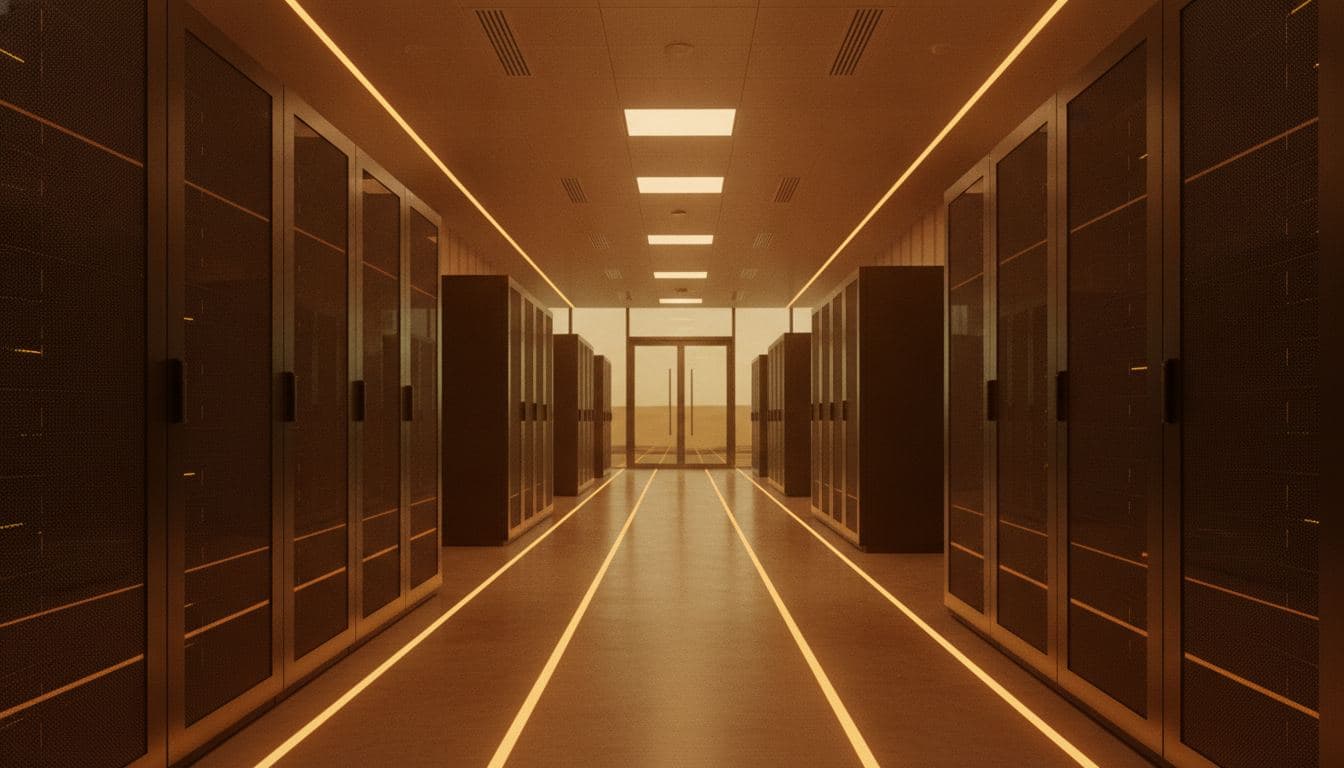
An AI data-centre power-management system coordinates power monitoring, UPS infrastructure, battery storage, backup generation, cooling loads and optional renewable energy to improve visibility, resilience and operational decision-making.
Mission-Critical Uptime Architecture
What is AI data-centre power management?
It is an optimization layer that sits above traditional UPS and BMS systems. By analyzing real-time IT loads, cooling demands, and grid stability, AI assists facility managers in forecasting energy spikes, predicting equipment wear, and strategically dispatching battery storage to shave peak demand without compromising critical redundancy.
The Escalating Demands of High-Density Computing
The transition from standard cloud workloads to AI model training and inferencing has fundamentally changed data centre power requirements. Rack densities are climbing from 10kW to over 40kW, placing unprecedented strain on legacy UPS systems and cooling infrastructure.
Operators face a dual challenge: ensuring absolute uptime during grid fluctuations while managing skyrocketing electricity costs. Conventional power systems lack the predictive intelligence to dynamically balance non-critical loads against available backup reserves.
Important Safety Architecture
AI is positioned strictly as an assistance and optimisation layer. It does NOT replace hardware protection relays, UPS controls, BMS safety protocols, or human engineering review.
System Architecture
- Utility Grid / Renewable Generation
- Automated Transfer / Backup Generators
- Uninterruptible Power Supply (UPS)
- Battery Storage (Lithium/VRLA)
- AI Predictive Management Layer
- Critical IT Load & Precision Cooling
System Components
UPS Infrastructure
Modular, high-efficiency UPS blocks ensuring zero-transfer-time backup.
Core requirement for all critical IT loads.
BESS & Peak Shaving
Utility-scale batteries deployed alongside generators to reduce demand charges.
When utility peak tariffs heavily penalize high energy spikes.
AI Forecasting Platform
Software layer analyzing historical data and ambient conditions to predict cooling loads.
For large facilities seeking to reduce PUE (Power Usage Effectiveness).
Capabilities & Outcomes
AI-Assisted Load Forecasting
Predicts cooling demands based on incoming IT workloads and external weather data.
Peak-Demand Management
Discharges battery storage during high-tariff periods to drastically reduce utility bills.
Ideal Applications
Enterprise Data Centres
Modernizing legacy facilities for higher density AI racks.
Edge Computing
Ensuring autonomous reliability for remote, unmanned micro-data centres.
Colocation Providers
Providing tenants with granular power metrics and guaranteed SLA uptimes.
Telecommunications
Protecting critical switching centers against catastrophic grid failures.
Deployment Process
1. Assess
Audit existing single-line diagrams, IT loads, and cooling requirements.
2. Analyse
Calculate required redundancy (N+1, 2N) and battery backup runtime.
3. Design
Engineer the UPS topology, BESS integration, and AI telemetry layer.
4. Configure
Establish monitoring protocols, thresholds, and alarm escalations.
5. Procure and Deploy
Install switchgear, UPS, batteries, and software platforms.
6. Monitor and Optimise
Train AI models on actual facility data to improve PUE over time.
Information We Need
- Facility type (Existing or Planned)
- Current or expected IT load (kW or MW)
- Required redundancy topology (e.g., 2N)
- Required battery backup runtime
- Cooling-system architecture
- Single-line diagram (SLD)
Frequently Asked
Book a Data Centre Power Assessment
Gletscher Energy will review your project requirements and recommend the next technical planning step.
- Engineering review of submitted details
- Initial feasibility assessment
- Direct consultation booking