A critical facility backup system separates loads into life-safety, essential, and non-essential branches, each with its own automatic transfer switch and maximum allowable interruption time. Life-safety loads such as operating theatres or emergency lighting typically require power restoration within 10 seconds, backed by both battery bridging and standby generation.
Life-Safety Grade Backup Power for Critical Facilities
Hospitals, emergency operations centers, and essential service buildings cannot tolerate power gaps. We design layered generator, UPS, and battery backup systems built around code-compliant transfer times and continuous load monitoring.
Code-Compliant Transfer & Redundancy Design
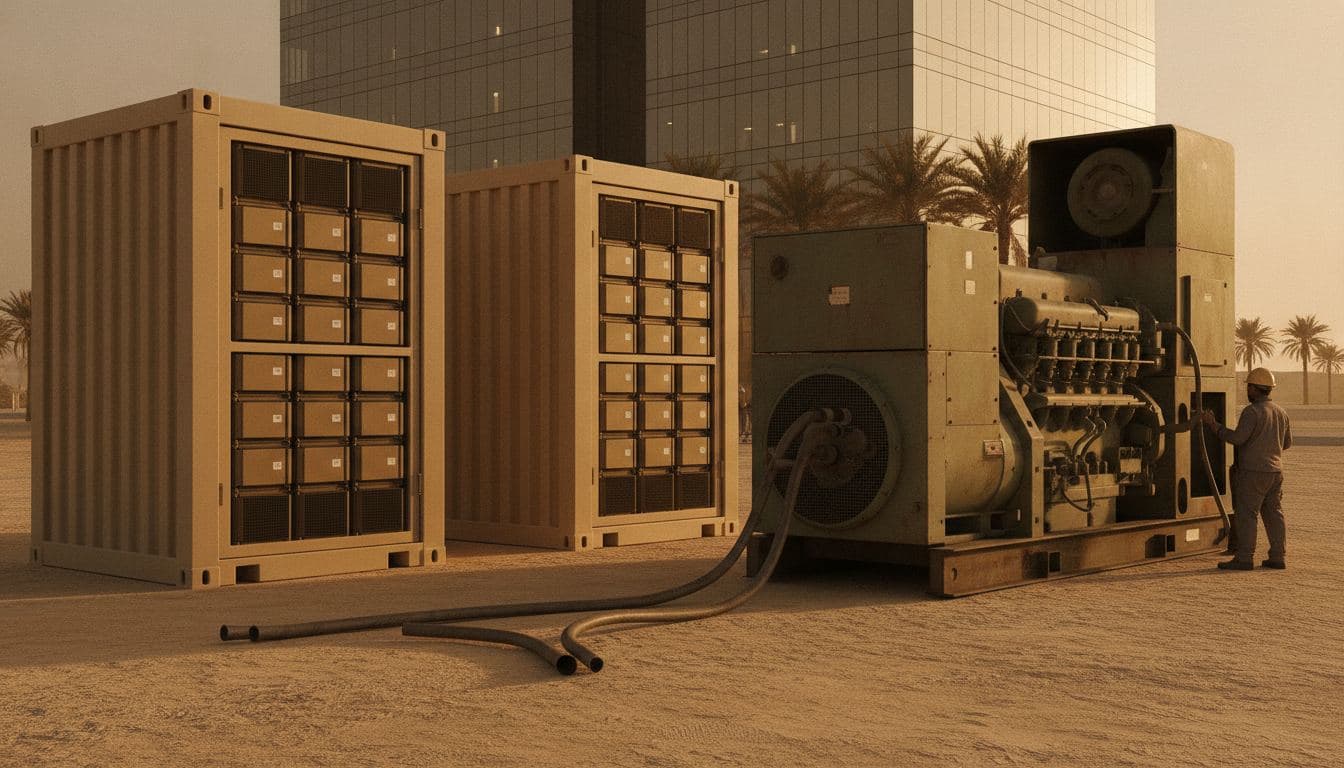
What makes a power backup system 'critical facility' grade?
A critical facility backup system separates loads into life-safety, essential, and non-essential branches, each with its own automatic transfer switch and maximum allowable interruption time. Life-safety loads such as operating theatres or emergency lighting typically require power restoration within 10 seconds, backed by both battery bridging and standby generation.
Protecting Loads That Cannot Fail
In hospitals, emergency response centers, and other essential facilities, a power interruption is not an inconvenience. It is a safety incident. Regulatory frameworks typically mandate segregated life-safety, critical, and equipment branches, each with defined maximum transfer times.
Many existing facilities rely on aging single-generator setups with no bridging power, leaving a gap between utility loss and generator start where life-safety loads are unprotected. We close that gap with layered UPS and battery bridging ahead of generator transfer.
Compliance Notice
Life-safety branch requirements vary by jurisdiction and facility type. All backup architectures must be validated against applicable local civil defense and health authority codes before installation.
System Architecture
- Utility Feed
- Life-Safety / Critical / Equipment Branch Split
- UPS + Battery Bridging (instant transfer)
- Automatic Transfer Switch to Standby Generator
- Continuous Load & Runtime Monitoring
System Components
Segregated Transfer Switches
Independent automatic transfer switches per load branch, meeting maximum interruption time requirements.
Wherever life-safety and equipment loads must be isolated from non-essential loads.
Bridging UPS & Battery Banks
Zero-gap battery power covering the interval between utility loss and generator start.
For any load with a maximum allowable interruption under 10 seconds.
N+1 Standby Generators
Redundant generator sets sized to sustain the full critical load through extended outages.
For facilities without dual utility feeds or with extended expected outage durations.
Ideal Applications
Hospitals & Clinics
Operating theatres, ICUs, and diagnostic imaging requiring uninterrupted power.
Emergency Operations Centers
Dispatch and command facilities with zero-tolerance for downtime.
Water & Wastewater Treatment
Pumping and treatment infrastructure classified as essential services.
Telecom Exchanges
Switching facilities under regulatory continuous-service obligations.
Deployment Process
1. Assess
Classify every load into life-safety, critical, and equipment branches.
2. Analyse
Determine maximum allowable interruption time per branch against applicable codes.
3. Design
Engineer the transfer switch, UPS, and generator topology for each branch.
4. Configure
Specify battery bridging capacity and generator start/transfer sequencing.
5. Procure and Deploy
Install and commission with load-bank testing before handover.
6. Monitor and Optimise
Continuously track transfer events, battery health, and generator run-hours.
Information We Need
- Load classification (life-safety / critical / equipment)
- Maximum allowable interruption time per branch
- Applicable local code or health authority requirement
- Existing generator and ATS configuration
- Required runtime for extended outages
- Facility occupancy and operating schedule
Frequently Asked
Request a Critical Backup Power Review
Gletscher Energy will review your project requirements and recommend the next technical planning step.
- Engineering review of submitted details
- Initial feasibility assessment
- Direct consultation booking